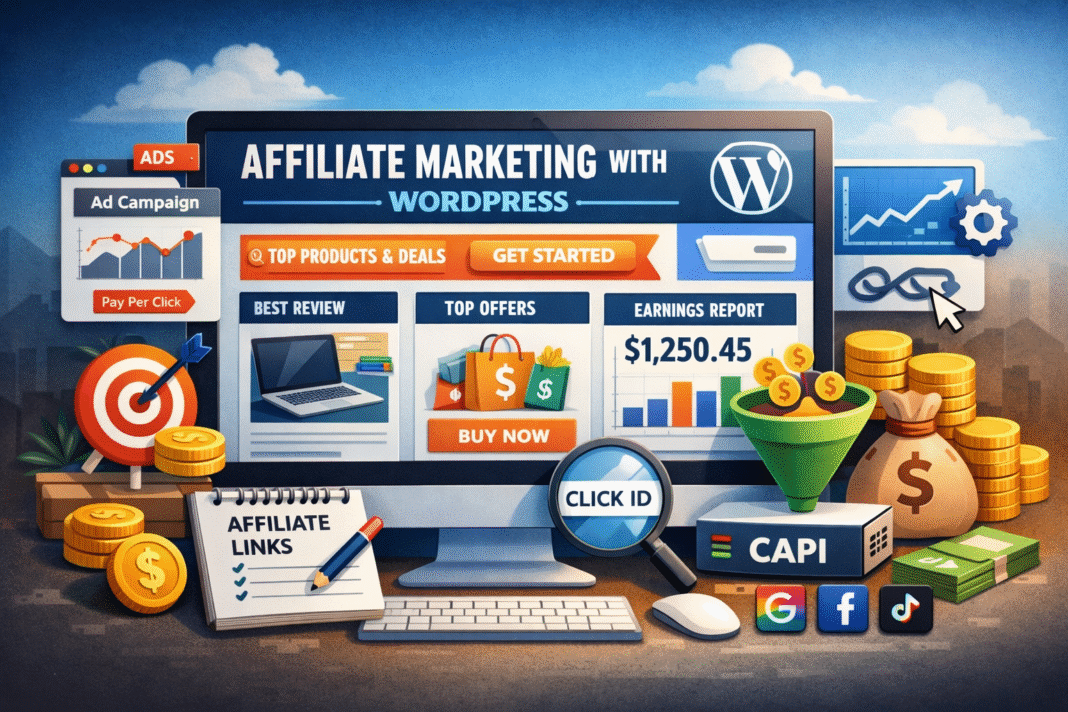

If you’ve ever tried running affiliate campaigns, you know there’s a lot more to it than just slapping an ad up and waiting for clicks. The real challenge is connecting the dots: from the ad, to your landing page, to the affiliate offer, and finally back to the ad platform so it knows which campaigns are actually profitable. That’s where having a WordPress website, paired with the right tools like SeedProd and WeCanTrack, becomes a game-changer.
The Core Advantage: Your Own WordPress Website
Imagine your WordPress site as the control center of your entire affiliate operation.
- Flexibility: You can create unlimited landing pages, content pages, product reviews, or lead capture forms.
- Ownership: Unlike using a hosted page builder or a platform like LanderLab, your WordPress site is yours, meaning if one campaign underperforms or a domain gets blocked, you can quickly spin up another page or clone it. No waiting on someone else’s platform.
- Ease of customization: Plugins like SeedProd let you design professional, high-converting landing pages without touching a line of code. And if you ever want full control, WordPress allows you to tweak every part of the site manually.
In short, WordPress + SeedProd gives you the perfect balance of speed, control, and affordability. You can launch campaigns faster than using a fully hosted builder like LanderLab and easily replicate your pages when needed.
Why Tracking Matters
Running traffic isn’t enough. Without proper tracking, you’re basically throwing money into the void, hoping some of it sticks.
This is where tools like WeCanTrack come in. The simplest way to think about WeCanTrack is as a translator between your affiliate sales and your ad platforms.
Here’s the challenge:
- A user clicks your ad (could be Reddit, Google, TikTok, or any network).
- They visit your WordPress landing page.
- They might click through to an affiliate offer, and the sale happens off your site.
Now, your ad platform has no way of knowing this sale happened. If the platform doesn’t know, it won’t optimize your campaigns, meaning the algorithm might reduce your traffic or show ads to the wrong audience.
How WeCanTrack Solves the Problem
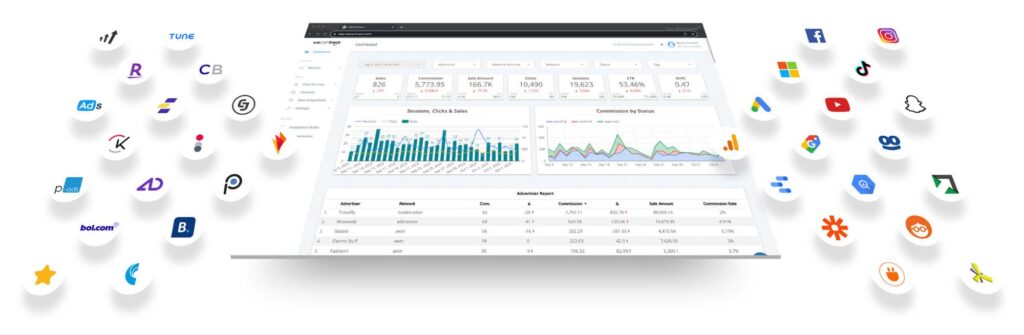
WeCanTrack bridges this gap using two key methods:
- JavaScript (JS) on your site
- This is installed either through a WordPress plugin or manually by adding the code to your pages.
- Its job is simple: capture the ad click identity (like Reddit’s
rdtclid, Google’sgclid, or other click IDs) and track user behavior on your site. Think of it as giving every visitor an ID card that stays with them.
- Server-side Conversion API (CAPI)
- When the user eventually completes the affiliate action (like making a purchase), WeCanTrack fetches the data from the affiliate platform and reports it back to your ad platform via CAPI.
- This ensures the platform recognizes the conversion, so your campaign data is accurate and the algorithm can learn effectively.
The combination of JS and CAPI is essential: JS knows who the user is, and CAPI reports the sale. Without either, conversions might not be attributed correctly, and your campaigns could underperform even if you’re making real sales.
Why WordPress is Still the Secret Weapon
Now, why does WordPress matter so much in this setup?
- It’s the foundation for JS tracking
- The JavaScript needs to live on a website. WordPress makes it easy to deploy globally, whether through a plugin or by adding the code manually.
- It gives you ownership and speed
- If a domain gets blocked or banned, you can spin up a new site in hours. Hosted solutions like LanderLab make this slower because you don’t own the infrastructure.
- It supports scalability
- You can build multiple campaigns, A/B test pages, and clone landing pages with SeedProd instantly. This makes your workflow much more efficient than relying solely on hosted platforms.
- It opens doors for multiple affiliate programs
- With your own site, you’re not limited to a single affiliate network. You can apply to many programs, build email lists, and create long-term content that keeps generating traffic.
Putting It All Together: The Full Workflow
Here’s what a practical setup looks like:
- User clicks your ad → Reddit, Google, TikTok, or other network
- They land on your WordPress + SeedProd page
- JS captures their click ID and binds it to the session
- They click through to the affiliate offer and complete the action
- WeCanTrack fetches the conversion from the affiliate platform
- Uses the click ID to match the user
- WeCanTrack CAPI reports the conversion back to the ad platform
- Facebook, Google, or Reddit now recognize the sale
- Algorithm optimizes your campaigns
- Traffic goes to users most likely to convert
This setup ensures every penny spent on ads is tracked, attributed, and optimized, which is exactly what separates amateur affiliates from professional ones.
Bottom Line
- A WordPress website is no longer optional if you want control, flexibility, and the ability to scale affiliate campaigns.
- Tools like SeedProd make building high-converting landing pages simple and cost-effective.
- WeCanTrack closes the gap between affiliate sales and ad platform optimization, ensuring that conversions are recognized and campaigns learn from real results.
- With this setup, you can run multiple ad networks, apply to various affiliate programs, and scale campaigns without being limited by hosted page builders.
In short: own the website, install JS + CAPI tracking, and you control the whole loop from click to conversion. Do that, and you’re no longer guessing—you’re running a fully accountable, data-driven affiliate operation.