
As ecommerce competition over Google search intent continues to heat up, many Shopify DTC brands and PPC agencies cycle through optimisation platforms without aligning tool strengths to their core traffic workflows. When comparing Adalysis against widely adopted alternatives including Optmyzr and Opteo, its design priorities become clear: it is built specifically to streamline systematic search advertising optimisation, with multiple features delivering clear practical value for retailers relying on high-intent search traffic.
1. The Statistical Ad Testing Framework: Aligning Time-Windows
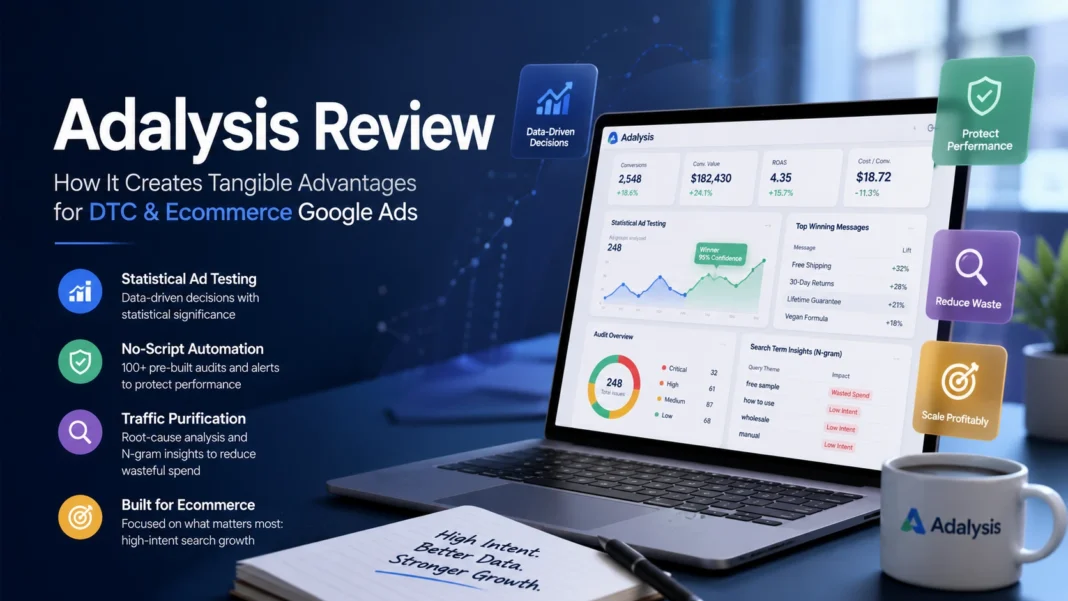
The most differentiated capability lies within its statistical ad testing framework, a module with meaningful real-world applications for ecommerce teams scaling Responsive Search Ads (RSAs).
- The Industry Blindspot: Most competing PPC tools run simple side-by-side comparisons without filtering timeline discrepancies. If new ad variants launch weeks apart, seasonal shifts, promotional calendars, or flash sales easily skew results, creating misleading conclusions around selling points, shipping offers, or guarantee messaging.
- The Adalysis Approach: It mitigates this issue by isolating data only from overlapping live windows when multiple creatives run concurrently. Beyond individual ad group analysis, it aggregates performance across hundreds of ad groups based on text patterns, paired with configurable statistical significance thresholds.
For a typical multi-SKU DTC brand selling home goods or wellness supplements, this functionality solves a common pain point: manually extracting universal high-converting messaging from fragmented RSA datasets. Instead of guessing, teams can identify which specific hooks—such as free shipping, extended return policies, or vegan formulations—deliver consistent conversion improvements across product lines, while spotting value propositions that only resonate within specific categories. Once statistically winning assets emerge, advertisers can bulk pause underperformers directly inside the platform, drastically cutting hours spent reconciling spreadsheets each month.
2. Structural Governance: A Pre-Configured, No-Script Ecosystem
A second practical strength for ecommerce operators is its comprehensive no-script audit and alert ecosystem, marking a clear contrast to Optmyzr.
| Dimension | Optmyzr Approach | Adalysis Framework |
| Technical Overhead | Relies heavily on custom Google Ads Scripts; requires debugging and ongoing code maintenance. | 100% Code-free; over 100 pre-configured audit rules working out of the box. |
| Workflow Friction | Requires jumping between script setups and custom automation rule-builders. | All corrective actions sit within a single grid interface, allowing one-click execution. |
| Team Onboarding | Higher learning curve; requires technical PPC resources or script familiarity. | Low friction; junior media buyers can interpret account health signals immediately. |
For mid-sized DTC teams without dedicated technical developers, script maintenance creates continuous overhead. Adalysis bypasses this by tracking risks that directly hurt retail profitability: keyword internal cannibalisation, quality score erosion, broken product landing pages, premature budget burn before peak shopping windows, and inconsistent negative keyword coverage.
For agencies pitching prospective ecommerce clients, these automated audit outputs also accelerate PPC audit report creation, making it simpler to quantify wasted spend and outline clear optimisation roadmaps during sales conversations without manual data crunching.
3. Traffic Purification: Root-Cause Deconstruction & N-Gram Parsers
Third, its root-cause performance analyser and mature N-gram toolkit directly address one of ecommerce advertisers’ biggest ongoing challenges: eliminating low-purchase-intent traffic.
Standard reporting surfaces rising CPAs or declining ROAS without explaining driving variables. Adalysis decomposes performance swings to isolate whether shifts stem from device behaviour, keyword match type distribution, time-of-day trends, or heightened competitor bidding.

Complementing this, the N-gram parser clusters repeated word sequences across search terms, enabling retailers to systematically flag wasteful query themes such as wholesale enquiries, tutorial searches, or free sample requests.
While Shopping and Performance Max campaigns inherently restrict manual keyword definitions, the platform leverages available search term insights within Google’s API limitations. This allows marketers to capture shifting search intent signals and build shared negative lists to help insulate campaign-level ROAS over long-term scaling cycles.
4. Realistic Boundaries for Ecommerce Use Cases
Even with these strengths, it is important to frame realistic boundaries for ecommerce use cases:
- Feed Constraints: Adalysis remains primarily optimised for Google Search and Microsoft Bing Search campaigns. It does not deeply manage feed configuration, merchant center optimization, or PMax product asset group signals.
- Bidding Focus: Its automated bidding tools are functional yet not its core focus; power users wanting granular, layered portfolio bidding rules may lean toward alternative specialized bid engines.
- Data Retention: Historical ad test data is limited to roughly six months, which creates constraints for slow-converting verticals such as furniture or luxury consumer goods requiring extended observation windows.
Mapping the Strategic Fit
Tool selection ultimately hinges on matching built-in strengths to recurring workflow bottlenecks. For retailers aiming to systematise RSA testing, standardise account health monitoring, and clean low-value search traffic at scale without investing heavily in script development, Adalysis contains multiple differentiated features capable of lifting structural consistency within Google search operations.